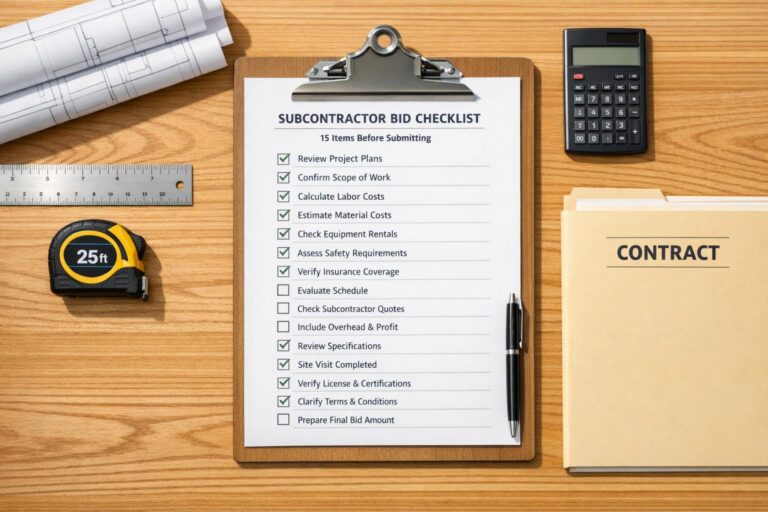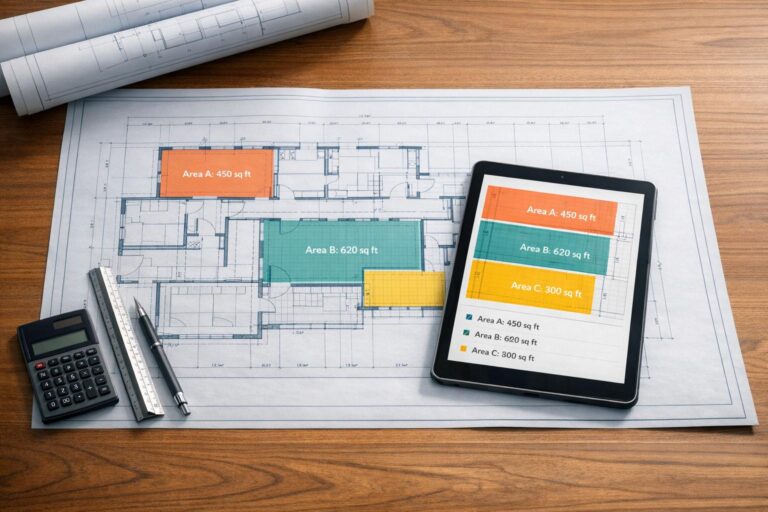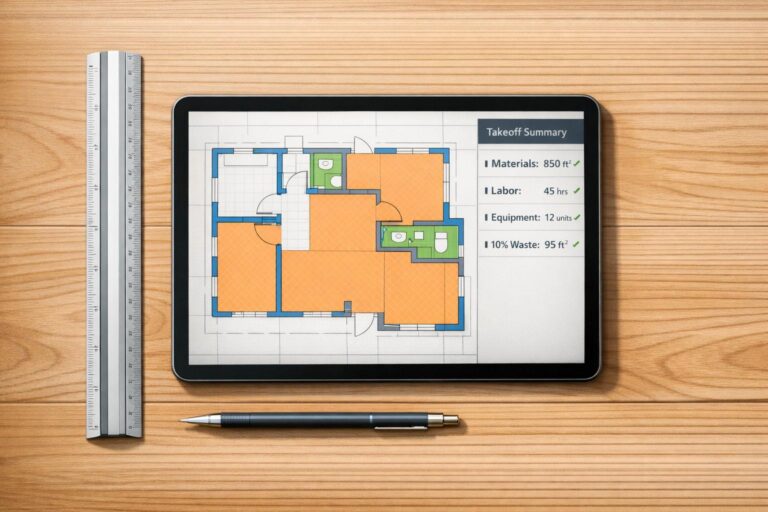
Estimating errors can destroy your profit margins. Subcontractors face costly pitfalls like inaccurate material takeoffs, underestimated labor costs, and skipping site visits. With material prices fluctuating up to 80% and labor expenses making up 60% of budgets, even small mistakes can wipe out profits in 2026. Avoid these 10 common estimating mistakes to protect your bottom line:
- Inaccurate material takeoffs: Leads to overordering or delays when materials run out.
- Underestimating labor costs: Not accounting for fully burdened rates or task-specific productivity.
- Skipping site visits: Overlooks hidden issues like site access or unforeseen damage.
- Using outdated material prices: Market volatility makes old quotes unreliable.
- Overlooking overhead costs: Missed indirect costs like insurance or permits shrink margins.
- Poor risk assessment: Failing to include contingencies for unforeseen costs.
- Inaccurate subcontractor quote reviews: Hidden exclusions can lead to unexpected expenses.
- Rushing estimates: Simple errors from tight deadlines can snowball into losses.
- Taking shortcuts with generic quotes: Ignores unique project conditions and site challenges.
- Submitting incomplete bids: Missing documents or errors signal unprofessionalism.
Key takeaway: Accurate, thorough estimates are essential. Use tools, peer reviews, and site visits to avoid costly mistakes and safeguard your profits.
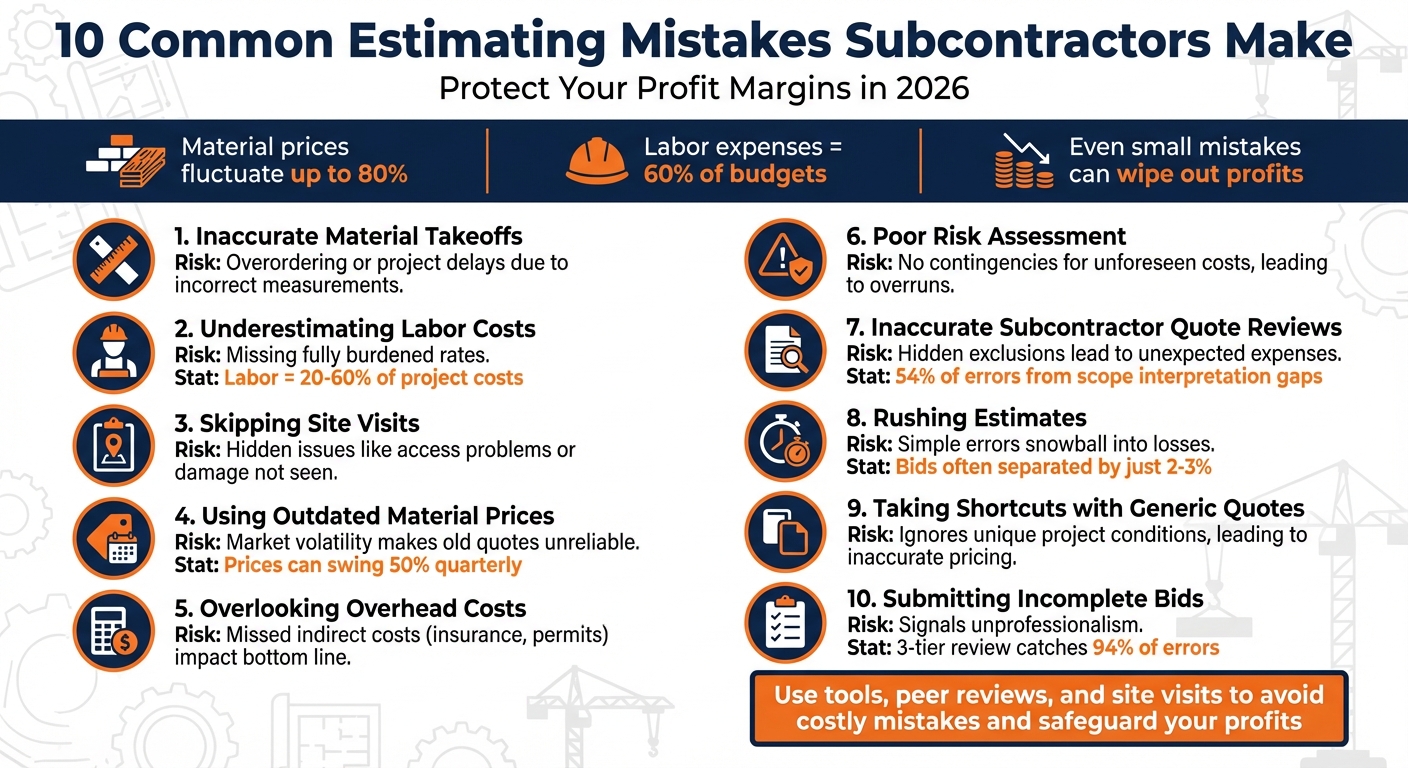
10 Common Estimating Mistakes Subcontractors Make and How to Avoid Them
The 5 Worst Estimating Mistakes – Scope Gaps, Productivity and Production
sbb-itb-4ee4ad4
1. Inaccurate Material Takeoffs
Getting material takeoffs right is essential for protecting your profit margins. If your calculations are off, you could end up ordering too much – wasting money – or too little, causing delays and extra costs when materials run out mid-project. Either way, your bottom line takes a hit.
One common issue is scale errors. For instance, failing to double-check both horizontal and vertical dimensions on every plan page can lead to distorted counts. Another frequent mistake happens in multi-story buildings. Imagine subtracting floor 10 from floor 28 and getting 18 instead of 19. That simple math error could mean missing an entire floor’s worth of materials in your bid.
Then there are the "hidden" items that are easy to overlook – things like blocking, fasteners, adhesives, temporary protection, or transitions between scopes. These omissions can have a big impact. As Contractor+ explains:
"Incomplete takeoffs are scope problems disguised as quantity problems."
Waste calculations are another tricky area. Using a one-size-fits-all waste factor often doesn’t work since different materials require specific allowances. And when key items are missed during planning, crews might face delays waiting for deliveries, which could lead to expensive overtime.
To avoid these pitfalls, take proactive steps: conduct peer reviews, use detailed checklists, and carefully cross-reference plans with specifications. If something doesn’t add up, submit an RFI or clearly document your assumptions to ensure accuracy.
2. Underestimating Labor Costs
Underestimating labor costs can derail your bids just as much as material takeoff errors, if not more.
Labor expenses typically make up 20–40% of most projects, and for specialty trades, that figure can climb to 60%. Getting these numbers right is non-negotiable, yet many estimators still base their calculations solely on wages, overlooking the fully burdened rates – a costly oversight that eats into profits before the project even begins.
Labor costs go far beyond hourly wages. They include payroll taxes, workers’ compensation, health insurance, benefits, and union dues, which can add 35–45% to the base rate for specialty contractors. Workers’ compensation alone can range from 8% to 40%, depending on the trade. As Contractor+ explains:
"Labor estimating errors rarely come from bad math. They come from incomplete cost definitions".
Another common pitfall is relying on company-wide productivity averages instead of accounting for task-specific rates. Crews work at different speeds, and a closer look might show one team completing tasks 29% faster than another. Your estimates need to account for these variations. Factors like site conditions, work height, weather, and project complexity can also significantly impact how long tasks take.
The financial stakes are high. On a large project, even a 5% variance in reported hours could add over $62,000 to labor costs – potentially wiping out your profit margin. For example, Syber Concrete Forming, a contractor with 300 employees, uncovered nearly $1 million in time discrepancies during their first year using biometric time tracking. This move cut payroll errors by up to 30%.
To stay competitive, calculate custom burden rates for each worker class, build in a 10–20% labor buffer, and update rates quarterly. Post-job reviews are also invaluable – they help you compare estimated hours to actual performance. In today’s tight 2026 labor market, where wage increases are outpacing contract pricing and skilled labor shortages mean longer training periods for new hires, precision matters more than ever.
Getting labor costs right is just one piece of the puzzle, but it’s a critical one to protect your profit margin.
3. Skipping Site Visits
Skipping a site visit can hurt both your budget and your credibility.
While client-provided photos may seem thorough, they often miss key details. A site visit uncovers physical realities that pictures and plans simply can’t show – like narrow driveways that complicate material deliveries, hidden damage such as rotted framing, or the absence of a staging area that could lead to costly off-site storage. Projul sums it up perfectly:
"Never estimate a job you haven’t seen. Photos from the client don’t cut it. You need boots on the ground."
Accurate estimates start with firsthand observations, making in-person evaluations essential.
Take the financial risks into account: In a 2026 case highlighted by Projul, an Arizona remodeling contractor estimated a kitchen gut-and-replace project at $35,000 based solely on homeowner photos. By skipping a site visit, he missed a rotted subfloor beneath the dishwasher. The actual costs ballooned to $42,000 – a $7,000 error that could have been avoided with a quick visit.
When you visit a site, bring tools to measure access points, utility locations, and mobilization distances. For remodeling jobs, factor in that labor often takes 15–20% longer compared to new construction due to demolition and working around existing structures. Don’t forget travel time – a crew of four with a 45-minute commute each way could rack up an extra 30 hours of paid, non-productive labor over a two-week project.
Never submit a bid without seeing the site. A quick visit safeguards your profit margin and helps you avoid unpleasant surprises once the work begins. By physically inspecting the property, you set yourself up for more accurate labor and material estimates moving forward.
4. Using Outdated or Single Material Prices
Accurate pricing data is essential for keeping budgets in check. Relying on outdated prices or a single supplier’s quote can quickly throw your estimates off track. Material costs are no longer predictable – they fluctuate rapidly due to supply chain issues and market changes. A price from just six months ago might already be irrelevant.
Let’s look at some numbers: over the past decade, structural steel prices have experienced quarterly swings of up to 50%. In April 2026, plumbing materials like water heaters, valves, and pumps saw price increases ranging from 5% to 9% – in just one month. Similarly, when the GBP/EUR exchange rate dropped from 1.17 to 1.13 between October 2024 and February 2025, contractors importing items like electrical switchgear and façade components faced steep cost hikes. As Pratik Watkar from Contractor+ aptly explains:
"Material price volatility is not an estimating error. Failing to plan for it is."
This kind of volatility, paired with trade-specific estimating software, can seriously eat into profit margins.
To navigate these challenges, it’s crucial to diversify your sourcing. Relying on a single supplier’s quote leaves room for gaps in your cost estimates. For example, one supplier might exclude fees for delivery, waste disposal, or offloading, creating an incomplete picture of your expenses. Comparing quotes from multiple vendors ensures you capture the full scope of costs. Additionally, always track the validity window of supplier quotes – if a quote expires before you make a purchase, it’s no longer reliable. For items prone to sharp price changes, like copper or steel, tie escalation allowances to those specific materials instead of using a generic contingency.
Building strong supplier relationships, locking in pricing early, and adjusting historical costs to reflect inflation and current market trends can help safeguard your margins. For more detailed advice, explore our construction estimating guides. The difference between a precise estimate and an outdated one can determine whether your profits hold steady – or vanish entirely.
5. Overlooking Overhead and Indirect Costs
Skipping over overhead and indirect costs can quietly chip away at your profits. Sure, a job might seem profitable at first glance, but if you’re not accounting for all expenses, those margins can shrink – or even disappear – when viewed across the year. As Contractor+ aptly states:
"Overhead estimate mistakes do not break jobs individually. They break businesses over time."
The challenge lies in visibility. Fixed costs like office rent, administrative salaries, insurance, and software subscriptions often go unnoticed until year-end, turning supposed profits into losses. And with insurance and compliance costs rising faster than revenue in 2026 for many contractors, ignoring these can make recovery even harder.
The gap between base wage quotes and fully burdened rates is another trap. For example, quoting $25 per hour when the actual fully burdened rate is $32 per hour leads to a $7 per hour shortfall. Over a multi-week project, that adds up fast.
Indirect costs tied to specific projects are just as tricky. Permits, inspection fees, temporary utilities, site cleanup, and debris removal often slip through the cracks, especially if you assume the general contractor is covering them. Kaiya Barrett from ConstructConnect highlights this risk:
"Make sure to factor in overhead and soft costs, too, such as permitting and inspections which can often be forgotten or neglected."
If these costs aren’t explicitly outlined in your contract, they’ll likely come out of your pocket.
To safeguard your margins, clearly separate fixed overhead (e.g., office rent, admin staff) from variable overhead (e.g., permits, equipment rentals). Allocate these costs accurately. Use a detailed checklist that includes insurance, temporary protection, staging, trade coordination, and minor materials. Reviewing your overhead recovery rate quarterly ensures your markups keep pace with your operating expenses. By consistently factoring in these indirect costs, you’ll create bids that reflect the true profitability of your projects. This approach also sets a strong foundation for the advanced estimating strategies covered in the next sections.
6. Poor Risk Assessment and Contingencies
Accurate takeoffs and labor estimates are essential for protecting your profits, but they’re only part of the equation. A thorough risk assessment is just as critical. Skipping this step shifts the burden of unforeseen costs directly onto you. When subcontractors fail to anticipate project uncertainties and allocate appropriate contingencies, they risk turning a profitable bid into a financial disaster.
The biggest mistake? Treating contingency as optional. Many subcontractors cut contingency buffers to meet a target bid price, thinking it will make them more competitive. However, as Contractor+ explains:
"Contingency does not increase cost. It limits exposure."
Without a buffer, even small hiccups – like material delays or unexpected site conditions – can leave you footing the bill.
Start by identifying potential risks before pricing. Consider factors like the project owner’s payment track record, contract terms (fixed-price versus flexible), materials with volatile pricing or long lead times, site accessibility challenges, weather conditions, or the experience level of your crew. These elements aren’t just details – they’re clues that help you determine how much contingency to build into your estimate. Instead of defaulting to a flat percentage, tailor your contingency to the specific risks of the project, addressing the "known unknowns" you’ve identified.
It’s also important to distinguish contingency from allowances. Contingency is meant for unforeseen risks, while allowances cover specific scope items. For example, in the Utah State Capitol project (November 2023), the owner allocated a 6% total contingency: 3% for potential scope changes, 2% for unknown site conditions uncovered during selective demolition, and 1% for political factors.
Kaiya Barrett from ConstructConnect emphasizes the importance of this process:
"Failure to assess risks and build contingencies into your construction estimating process will be detrimental to your project".
7. Inaccurate Subcontractor Quote Reviews
Flawed subcontractor quotes can seriously derail your bid. It’s important to never take these quotes at face value. A subcontractor’s price often reflects their interpretation of the work, which may exclude items they consider "gray areas." As Contractor+ explains:
"Subcontractors price defensively. They exclude gray areas unless explicitly stated".
These exclusions often include things like permits, inspections, temporary utilities, cleanup, debris removal, and trade coordination. When these are overlooked, they end up on your estimate and eat into your margins. A solid review process can make a huge difference: studies show that a three-tier review process (self-check, peer review, and management review) catches 94% of major errors before submission, compared to only 67% with a single reviewer. In competitive public bids, where contractors often price within 2% of each other, even one missed exclusion can turn a winning bid into a costly mistake.
To avoid this, adopt a structured review process. Start by organizing quotes by trade and carefully examining quantities, labor hours, and material grades. If a quote seems unusually low, it might indicate missing scope rather than superior efficiency. Cross-check every quote against your own conceptual estimate or internal benchmarks to spot any red flags.
Pay attention to conditional language that could signal hidden costs. For instance, phrases like "assumes standard installation conditions" might mean extra charges if unexpected issues like structural repairs or code upgrades arise. Always request a documented list of assumptions with each quote. This ensures you’re capturing all costs accurately, including fully burdened labor rates – covering payroll taxes, insurance, and potential overtime for tight schedules.
Another critical step is verifying measurements and specifications. Scope interpretation gaps account for 54% of construction estimate errors. Many of these arise when subcontractors haven’t reviewed the project specs or visited the site. Use Requests for Information (RFIs) to clarify vague terms. For example, if a painter quotes "all exposed surfaces", confirm whether this includes areas like mechanical rooms or hidden structures. Taking the time to validate quotes upfront protects your margins and lays the groundwork for better project management.
8. Rushing Estimates Without Double-Checks
Tight bid deadlines often push estimators to rush through their work – a recipe for errors that can snowball into costly mistakes. When estimates are hurried, simple transfer errors, recycled details from previous projects, or overlooked essentials like fasteners, blocking, or temporary protection can slip through the cracks.
In competitive public bids, where the margin of difference is often just 2–3%, even a minor misstep – a single keystroke error or a forgotten line item – can turn a promising bid into a financial headache.
Rushing also encourages risky shortcuts. As Contractor+ aptly puts it:
"Fast errors remain errors".
Even with concrete estimating software that can boost efficiency by up to 80%, human oversight is critical. Automation alone isn’t enough to catch every potential issue.
To avoid costly mistakes, enforce disciplined processes. Use standardized checklists for takeoffs, scope reviews, and subcontractor leveling. Always have a second reviewer go over all calculations. Just before submission, conduct a final addenda check to ensure you’ve accounted for any last-minute design updates.
Another key step? Involve field personnel in reviewing takeoffs before finalizing your bid. Their hands-on experience often helps identify missing scope items faster than a spreadsheet review. Taking an extra hour to double-check your work can safeguard your margins and prevent thousands of dollars in losses. A disciplined approach to reviewing estimates not only reduces risks but also strengthens the overall accuracy of your bids.
9. Taking Shortcuts with Generic Quotes
Relying on generic bids might seem like a time-saver, but it can lead to costly mistakes. When you reuse an old estimate without tailoring it to the specifics of a new project, you’re essentially making an educated guess – and that guess can wreak havoc on your profit margins. Unlike thorough subcontractor reviews, generic bids often overlook site-specific challenges and extras that can significantly alter costs.
For example, a downtown project with restricted delivery hours and no staging area can increase labor costs by 15–25% compared to a similar project in a suburban location with fewer restrictions. A generic template won’t reflect these kinds of differences; it assumes all job sites are the same, which is far from reality. This approach not only risks financial losses but also damages your reputation for accuracy and professionalism. As Buildxact points out:
"In their eyes, an unprofessional bid may signal unprofessional work if they hire you".
Clients can easily detect a copy-paste estimate, and it often raises concerns about the quality of work they can expect.
To avoid these issues, customize every bid by clearly outlining your assumptions and exclusions in a detailed scope of work document. Carefully compare plans with written specifications to catch discrepancies – like missing fasteners, blocking, or temporary protection that might not appear on the drawings. Adjust labor productivity rates based on actual site conditions, crew expertise, and access limitations rather than relying on generic company averages.
Digital tools can help refine your estimates by providing precise measurements, ensuring your bids align with actual material needs. However, even with advanced software, human validation is essential. As Contractor+ emphasizes:
"AI estimating software improves speed, not accuracy, without human validation".
Use these tools as a foundation, but always verify and adjust the outputs to reflect the specific materials, labor conditions, and unique challenges of the project. Taking the time to customize each bid ensures you account for all variables and maintain the accuracy your clients expect.
10. Submitting Low-Quality or Incomplete Bids
Submitting a bid that’s rushed or poorly formatted can easily knock you out of the running. Forgetting key documents or making simple math errors sends a clear message to general contractors: you’re not paying attention to details. As eSUB Construction Software puts it:
"Mistakes caused by rushing the paperwork that can be easily fixed can ultimately kill winning new business".
In competitive public projects, where bids are often separated by just 2–3%, even a small oversight – like leaving out a line item or making a formatting mistake – can cost you the job.
Accuracy in your material and labor estimates is crucial, but so is presenting a complete and professional bid package. This is even more critical in 2026, as many owners and government agencies now use AI-powered cost validation tools. These tools automatically flag bids that deviate from independent estimates. They look for gaps in scope, inconsistent pricing, and missing documentation. If your bid is incomplete or poorly formatted, it might be flagged for extra scrutiny before it even reaches a human reviewer. Contractors who adopt structured review processes and digital tools report 23% higher bid win rates, proving that presentation really does matter.
To ensure your bid stands out, adopt a three-tier review process: self-check, peer review, and management approval. This method catches 94% of major estimating errors, compared to just 67% when a single reviewer handles it. Make sure your bid covers all drawing sheets, specification divisions, and even details or sections that might not appear on the main plans.
Include a formal "Assumptions and Clarifications" list in your bid. This should outline what’s included (like labor productivity rates) and what’s not (such as permits, temporary utilities, or debris removal). This step helps eliminate scope interpretation issues, which impact 54% of estimates. Adding insights from your pre-bid site visit also demonstrates your understanding of site logistics and boosts your credibility.
Another critical element is defining a price validity window. With material prices fluctuating by an average of 8.3% annually between 2022 and 2025, you need to specify how long your pricing is valid. Tools like top construction estimating software and standardized templates can help ensure your quantities are precise and your proposal format is consistent. A well-prepared bid not only protects your margins but also strengthens your reputation. Every detail matters when it comes to safeguarding your bottom line.
Conclusion
By 2026, even small estimating errors can completely erase profits. As Pratik Watkar from Contractor+ puts it:
"A small estimating error that once shaved two points off margin now wipes out profit entirely".
With 62% of contractors expressing concerns about a potential recession, precision is no longer optional. Every bid must be accurate, thorough, and defensible.
The ten common mistakes – like incorrect material takeoffs or incomplete bids – not only disrupt schedules but also harm profitability and client trust. Thankfully, these errors are avoidable with the right tools and strategies. ScopeTakeoff offers subcontractors a solution with features like trade-specific libraries, digital plan takeoffs, automatic calculations, and real-time supplier pricing. This system saves 1–3 hours of administrative work per bid and helps protect against market volatility. Additionally, fully burdened labor calculators ensure you’re factoring in payroll taxes, workers’ comp, and benefits – not just base wages.
Success in bidding requires both speed and accuracy. While advanced estimating software can improve workflow speed by up to 80%, consistent reviews and precise inputs are what truly secure winning bids. Often, the first contractor to deliver a detailed proposal wins the job. As Handoff aptly states:
"Estimating isn’t just an admin task; it’s the front line of your business. Get it wrong, and it costs you time, profit, and trust".
Every estimate you create reflects your professionalism. By focusing on accuracy and efficiency, you can protect your margins, enhance your workflow, and strengthen client relationships. In the end, the smallest details can make the biggest difference.
FAQs
What’s the fastest way to catch missing scope items before I bid?
The best way to spot missing scope items is to conduct detailed scope takeoffs early in the estimating process. Make sure every work item is clearly listed and documented. Visiting the site can reveal hidden conditions that might otherwise be overlooked. Using detailed checklists or leveraging technology can also boost accuracy. Taking these steps upfront helps minimize errors, avoid delays, and prevent disputes before submitting your bid.
How do I calculate a fully burdened labor rate for my crew?
To figure out a fully burdened labor rate, you need to account for all costs tied to labor – not just wages. This includes direct wages, payroll taxes, workers’ compensation, benefits, overhead expenses, and even profit margins. Once you’ve totaled these costs, divide the sum by the total productive hours your team is expected to work during the same timeframe. The result will be your hourly fully burdened labor rate.
How should I handle material price increases between bid day and buyout?
To handle material price fluctuations between the bid date and buyout, it’s wise to include a contingency or markup in your initial estimate. This buffer accounts for potential price changes. Additionally, keep a close eye on supplier price lists and market trends throughout the buyout phase. Adjust your estimates accordingly to reflect any shifts. By staying ahead of these changes, you can safeguard your profit margins and maintain accurate estimates, even in a volatile market.