General
Cost Libraries vs. Manual Estimating
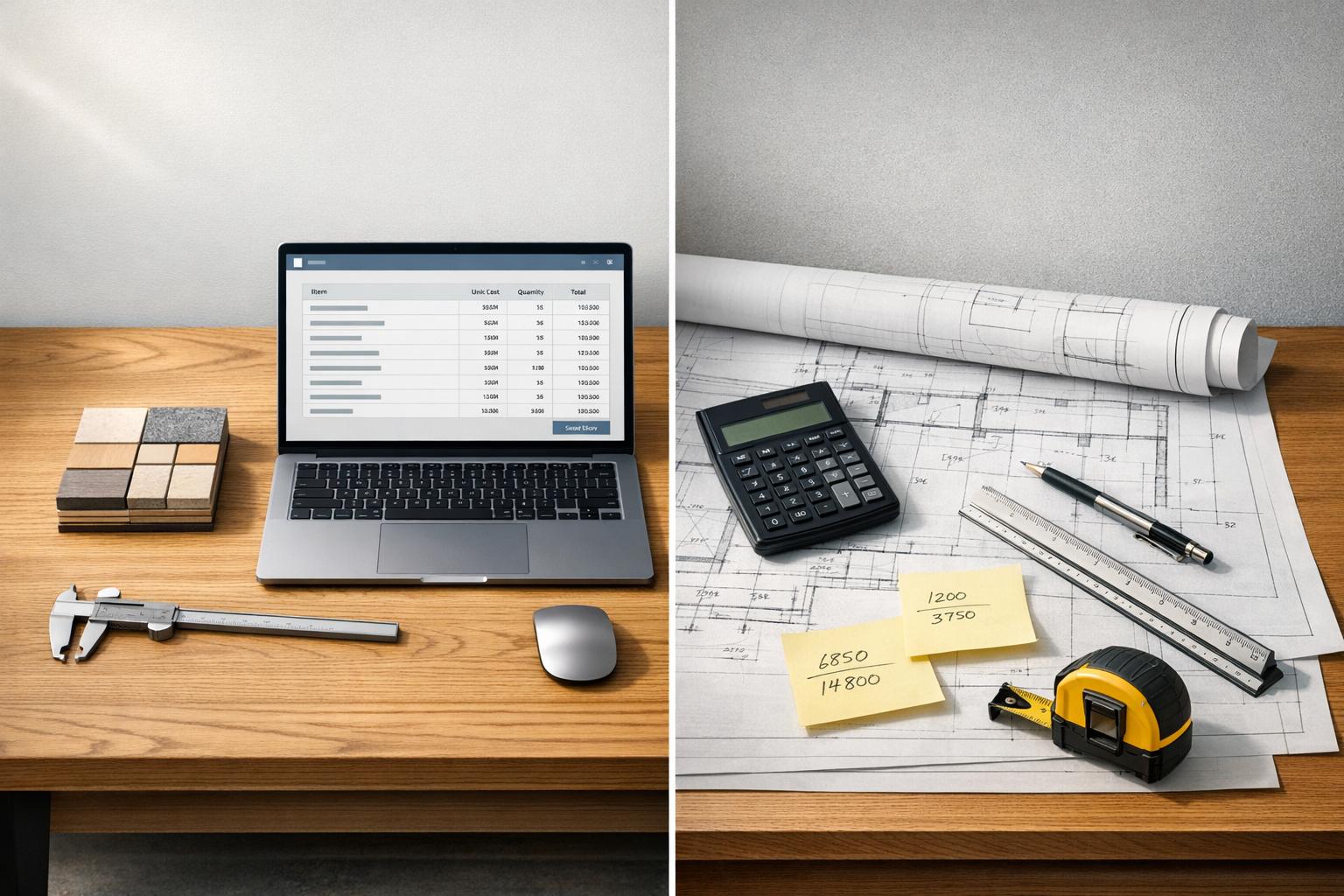
When preparing construction bids, subcontractors face a choice between cost libraries and manual estimating. Cost libraries use pre-built databases for materials, labor, and equipment — they save time, improve accuracy, and reduce errors, but require setup and regular updates. Manual estimating offers flexibility for unique or specialized projects with no software costs, but is slower, more error-prone, and harder to scale. For contractors handling large volumes or repetitive tasks, cost libraries are usually the better choice.
Choosing how you build estimates is one of the most impactful decisions a subcontractor makes. The right method protects margins, speeds up bid turnaround, and lets a small team compete for more work. The wrong method can quietly cost you jobs you should have won.
This guide breaks down both approaches — where each works, where each fails, and how to decide which fits your operation.
Quick comparison
| Aspect | Cost Libraries | Manual Estimating |
|---|---|---|
| Accuracy | High (standardized rates) | Variable (depends on estimator) |
| Time to complete | Hours | Days |
| Error risk | Low | High |
| Scalability | High | Limited |
| Cost | Subscription fees | No software costs |
| Best for | Repetitive tasks | Unique or specialized jobs |
Choosing the right method depends on your project type, volume, and priorities. Cost libraries excel in speed and consistency. Manual estimating provides control for specialized needs.
Benefits of Cost Libraries
Cost libraries bring measurable improvements to both the speed and accuracy of project estimates, making them an essential tool for modern construction estimating.
Faster Estimate Completion
With cost libraries, material, labor, and equipment costs are pulled directly from a pre-built database. Instead of manually adding individual items — like studs, drywall, screws, and labor — you can select pre-made assembly libraries that calculate all components based on a single measurement. Digital libraries link takeoff measurements directly to cost data, providing instant calculations. A residential single-level project that takes hours by hand can be completed in a fraction of the time with a digital library.
Better Accuracy
Standardized data in cost libraries ensures more consistent and precise estimates. By setting uniform labor rates, tax percentages, and markup figures across your company, you can build bids on a reliable financial baseline. Manual takeoffs often deviate from actual costs, but structured cost databases reduce that variance significantly.
Digital libraries also include error-checking tools that flag missing or duplicated items, reducing costly mistakes. Pre-built assemblies further reduce the chances of transcription errors, and some libraries even account for fully burdened labor rates — factoring in payroll taxes, workers’ compensation, and benefits for more accurate labor cost calculations.
Major Time Savings
A mid-size commercial project that might take 1–2 days to estimate manually can be completed in just a few hours using a cost library. Across a year of bidding, that adds up to hundreds of hours saved.
These time savings not only allow you to take on more bids without increasing staff but also make it easier to revise project details. Automated calculations mean changes that would take days manually can now be done in minutes.
Drawbacks of Cost Libraries
Cost libraries can streamline processes and improve estimate accuracy, but they come with their own set of challenges. Subcontractors should weigh these limitations carefully before relying on this method.
Setup and Maintenance Requirements
Creating a cost library is no small task — it demands considerable effort upfront. Each item must include details like the name, cost code, unit, and applicable tax or markup rates. For subcontractors, one of the hardest parts is calculating burdened labor rates. This involves adding payroll taxes, workers’ compensation, benefits, and paid time off to base wages. Overlooking any of these factors can lead to labor costs being underestimated by 20% to 30% or more.
Shared cost libraries introduce an additional layer of complexity. Without proper controls, team members could unintentionally alter critical rates, affecting every estimate tied to those items. This makes ongoing management and strict access controls essential, adding to the workload.
Need for Regular Updates
To stay accurate, cost libraries require constant updates. Material prices can fluctuate rapidly, with supplier quotes often expiring within 30 to 60 days. Failing to update these figures could shrink your profit margins, as outdated data creates gaps between estimated and actual costs.
Labor rates also need periodic adjustments. To ensure accuracy, calculate your overhead percentage by dividing annual general overhead by total annual sales, then apply this percentage to library items. This process should be repeated at least annually. For materials like lumber, concrete, or copper — which are especially prone to market changes — monthly updates might be necessary.
Customization Constraints
While cost libraries are effective for standard, repetitive projects, they often fall short for specialized jobs. Unique projects, such as historic renovations or those with challenging site conditions, can exceed the limits of standardized unit costs. The cost of different types of concrete or hardwood flooring might require manual adjustments to ensure accuracy.
Additionally, libraries may overlook smaller but essential factors like site protection, specialized cleanup, disposal fees, or coordination time. These overlooked elements can add 5% to 10% to total job costs. For high-risk or highly specialized projects with unknown variables, setting aside contingency funds — sometimes 15% or more — can help mitigate the limitations of cost libraries.
Benefits of Manual Estimating
For many masonry subcontractors and other trades, manual estimating remains a practical and reliable choice. While cost libraries can improve efficiency, manual methods provide a level of flexibility that’s hard to beat when dealing with unique or specialized projects.
Full Control for Unique Projects
Manual estimating allows complete control when working on non-standard or highly specialized jobs. Projects like historic renovations, intricate architectural details, or those with unusual site conditions often require personal judgment that automated systems may not accommodate.
This method is especially useful during the early design stages when only rough sketches or non-digitized plans are available. For tasks like field measurements or on-the-spot adjustments, manual review can often be quicker and more practical than setting up a digital system.
No Costly Software Subscriptions
One of the biggest advantages of manual estimating is avoiding software subscription fees. By relying on standard office tools, subcontractors can bypass recurring monthly or annual costs. While entry-level estimating software may not seem like much per month, it adds up over a year — an expense that smaller firms may find burdensome.
Ideal for Quick, Simple Jobs
Experienced estimators can dive straight into manual estimating without the delays of setting up or learning new software. For quick, high-level estimates — like those based on square footage — manual methods are often faster and easier than navigating digital tools. When dealing with small, uncomplicated jobs where the scope and pricing are already familiar, basic tools can be far more efficient than complex software.
Drawbacks of Manual Estimating
Manual estimating introduces risks like higher error rates, delays, and inconsistent results, all of which can negatively impact profitability. These challenges underline why many in the construction industry are turning to cost libraries and digital tools for estimating.
Higher Error Rates
When estimators rely on manual methods, they often review drawings and perform calculations by hand. This process opens the door to errors — misreading dimensions, transposing numbers, or simple math mistakes. Manual takeoff methods are inherently more error-prone than digital tools that automate measurements and calculations.
The financial impact of these errors can be severe. A miscalculation on materials means you’re either overordering and wasting money, or underordering and delaying the project. Either way, it eats into the margin on the job. Without a comprehensive cost library, estimators may find themselves redoing work, leading to inconsistent pricing for labor, materials, and markups.
Longer Preparation Time
| Project Type | Manual (Average) | Digital (Average) |
|---|---|---|
| Residential (single-level) | 3–4 hours | 45–60 minutes |
| Mid-size commercial | 1–2 days | 2–4 hours |
| Large multi-story building | 3–5 days | 5–8 hours |
This efficiency gap isn’t just about saving time — it directly impacts business outcomes. The contractor who can turn around bids faster gets in front of more opportunities. While one estimator is still double-checking measurements, another using digital tools has already submitted multiple bids. More bids mean more chances to win.
Inconsistent Results Across Teams
Manual estimating relies heavily on individual judgment, which can lead to varying results among team members. Without standardized templates or software, estimates often differ in format and content, making it hard to compare or compile data.
Version control is another common issue. Manual estimates typically exist as files on a single computer or as printed documents, and it’s not uncommon for team members to work from different versions of an estimate, creating confusion and potentially costly miscommunications.
Cost Libraries vs. Manual Estimating: Side-by-Side
Looking at cost libraries versus manual estimating reveals striking differences in how they perform for subcontractors — especially when it comes to speed, precision, and the ability to handle more projects.
| Aspect | Cost Libraries / Automated | Manual Estimating |
|---|---|---|
| Accuracy | High (standardized inputs) | Variable |
| Time to complete | Hours (more bids) | Days |
| Error risk | Low (automated) | High (human error) |
| Scalability | High | Limited |
| Revisions | Instant recalculations | Time-consuming |
| Data entry | Automated export | Manual spreadsheet input |
| Consistency | High (standardized) | Low (varies by user) |
| Collaboration | Smooth (shared access) | Challenging (single device) |
| Update speed | Instant | Slow (manual) |
Digital tools cut estimation time substantially while achieving a level of accuracy that manual methods just can’t match. This efficiency doesn’t just save time — it allows estimators to handle more bids, boosting overall productivity. For modern estimators aiming to remain competitive, investing in HVAC estimating software or other AI-powered takeoff solutions is no longer optional — it’s essential.
Which method should you use?
The best method depends on the specifics of your project’s size, complexity, and deadlines.
- You’re bidding repetitive tasks across drywall, painting, flooring, or HVAC
- You install similar wall assemblies or standardized systems regularly
- You want pricing consistency across multiple estimators
- You’re scaling and bid volume is becoming a bottleneck
- You want to take on more bids without expanding your team
- You’re working on small, one-off projects
- The job is highly customized or has unique site conditions
- Setting up a digital library isn’t worth the time investment
- You need rough, early-stage estimates from sketches
- Speed of judgment matters more than data structure
How ScopeTakeoff Can Help
For subcontractors seeking both speed and flexibility, ScopeTakeoff offers a solution that merges automated efficiency with manual precision.
ScopeTakeoff provides trade-specific assembly libraries tailored to over 10 trades, including concrete, masonry, roofing, and landscaping. Instead of starting from scratch, you can use pre-built assemblies based on real-world installation practices. The PDF plan takeoff feature automates quantity extraction from digital plans, simplifying your workflow and reducing errors.
At $100 per person per month with no annual contract, you can explore the benefits of automation without a long-term financial commitment. Multi-entity profiles and team estimating tools offer a balanced approach — blending adaptability with standardized processes.
The Bottom Line
Deciding between cost libraries and manual estimating comes down to balancing efficiency, accuracy, and scalability. Manual methods might work for one-off projects, but they often lead to higher error rates and wasted time. A small $2 per square foot error on a 10,000-square-foot job could result in a $20,000 loss — enough to wipe out the profit margin for an entire project.
Cost libraries provide consistent pricing and reusable assemblies, saving you from starting over with each estimate. They scale effortlessly, allowing you to handle multiple bids at once without needing to expand your estimating team. For subcontractors working with tight profit margins, disciplined estimating is non-negotiable. Even small mistakes — like underestimating fully burdened labor rates by 20–30% — can turn a seemingly successful bid into a financial loss.
Frequently asked questions
Try estimating software built for subcontractors
14-day free trial. All trade libraries included. No credit card required.
Start free trial →
Concrete · Masonry · Drywall · Painting · HVAC · Flooring · Remodeling · Landscape · Asphalt · Roofing