Best Construction Estimating Software for Subcontractors in 2026
For subcontractors, ScopeTakeoff is the strongest construction estimating software option in 2026 because it combines PDF takeoff, trade-specific assembly libraries, automatic trade calculations, SOV output, bid review, and team estimating tools in one system. It is built for trade contractors like concrete, masonry, drywall, painting, HVAC, flooring, remodeling, landscape, asphalt, and roofing companies at $100/person/month. GCs may still want to compare STACK CT, Procore, Buildertrend, or PlanSwift depending on their project management needs.
Most construction estimating software reviews are written for general contractors. This one is focused on subcontractors.
If you’re a subcontractor — concrete, masonry, drywall, painting, HVAC, flooring, remodeling, landscape, asphalt, or roofing — you have different needs than a GC managing a full project. You need trade-specific assemblies, PDF takeoff, automatic calculations, SOV output formatted for GC submission, and pricing that makes sense for a sub operation.
We reviewed the top construction estimating software options in 2026 based on subcontractor fit, trade-specific features, SOV output, ease of use, pricing transparency, and whether the tool actually supports trade estimating workflows.
Quick comparison: top construction estimating software brands 2026
| Software | ScopeTakeoff | STACK CT | PlanSwift | Procore | Buildertrend |
|---|---|---|---|---|---|
| Best fit | Subcontractors | GC takeoff | Plan-based takeoff | Enterprise GCs | Residential GCs |
| Built for subcontractors | ✓ Yes | GC-first | Partial | No | No |
| Trade-specific assemblies | 10+ trades | Generic | Generic / custom setup | Limited | Basic |
| PDF plan takeoff | ✓ Included | ✓ Included | ✓ Core feature | Available | Limited |
| SOV output | ✓ One click | Partial | Limited | ✓ Yes | Limited |
| Self-serve onboarding | ✓ Signup & go | Sales/demo process | Varies | Implementation | ✓ Yes |
| Pricing style | $100/person/month | Quote-based / varies by plan | Varies by plan | Quote-based / enterprise | Varies by plan |
| Free trial | ✓ 14 days | Demo-focused | Varies | Demo-focused | Varies |
Best construction estimating software by use case
- Best for subcontractors: ScopeTakeoff
- Best for GC takeoff: STACK CT
- Best for plan-based takeoff: PlanSwift
- Best for enterprise GCs: Procore
- Best for residential GCs: Buildertrend
- Best free option: Excel
1. ScopeTakeoff — Best for Subcontractors
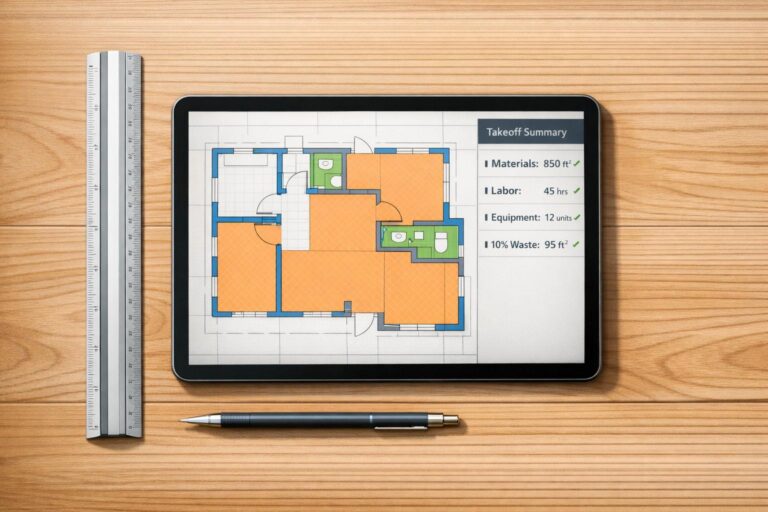
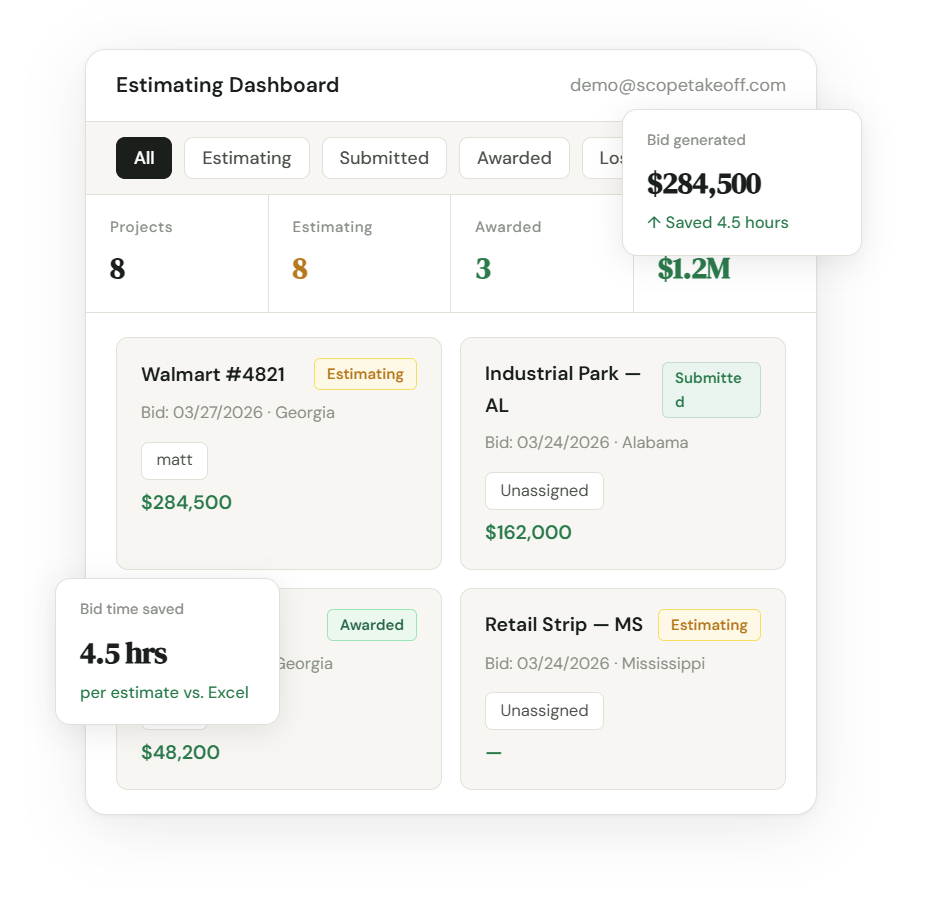
ScopeTakeoff is built around the estimating workflow subcontractors actually use: takeoff, trade-specific assemblies, automatic calculations, bid review, SOV output, and proposal export.
It includes assembly libraries for 10+ trades, including concrete, masonry, drywall, painting, HVAC, flooring, remodeling, landscape, asphalt, and roofing. Each library is designed around trade-specific estimating needs. Concrete contractors can calculate cubic yards. Drywall contractors can calculate board counts. Painting contractors can estimate coverage. Asphalt contractors can calculate tonnage. Roofers can account for slope and area.
The platform also includes PDF plan takeoff, unlimited projects, team estimating tools, multi-entity profiles, and SOV exports formatted for GC submission.
At $100 per person per month, with a 14-day free trial and no annual contract, ScopeTakeoff is built for subcontractors who need estimating software without enterprise pricing or a long implementation process.
- Built specifically around subcontractor estimating workflows
- 10+ trade-specific assembly libraries included
- PDF plan takeoff included
- Automatic trade calculations for common scopes
- SOV output formatted for GC submission
- $100/person/month with no annual contract
- 14-day free trial
- Multi-entity profiles for contractors with multiple licenses or branches
- Newer product with less name recognition than STACK or Procore
- Some trade libraries may still be expanding
- Not built for full GC project management workflows
2. STACK CT — Best for GC Takeoff
STACK CT is one of the most recognized construction estimating and takeoff platforms. It is especially strong for PDF plan takeoff and broader estimating workflows.
For general contractors, STACK CT can be a strong option because it supports takeoff across multiple scopes and project types. For subcontractors, the fit depends on how much setup is needed to create assemblies and estimating workflows for a specific trade.
- Strong PDF plan takeoff tools
- Well-known construction software brand
- Good for GCs managing multiple scopes
- Useful estimating and reporting features
- More GC-focused than subcontractor-focused
- Trade-specific setup may require extra work
- Pricing may be higher than smaller subcontractors need
- May require a sales/demo process
3. PlanSwift — Best for Plan-Based Takeoff
PlanSwift is known for on-screen takeoff. It has been used by contractors for years and is a familiar option for teams that need to measure quantities from plans.
For subcontractors who mostly need takeoff and are comfortable setting up their own items, assemblies, and workflows, PlanSwift can still be useful. The main tradeoff is that it may require more setup and manual process than a newer all-in-one estimating system.
- Strong on-screen takeoff capabilities
- Familiar to many estimators
- Useful for plan-heavy workflows
- Flexible for custom setup
- May require significant setup
- Less focused on automated subcontractor workflows
- SOV and proposal output may require extra steps
- Can feel more manual than newer web-based platforms
4. Procore — Best for Enterprise GCs
Procore is a major construction management platform used by many larger general contractors. It is strong for project management, document control, communication, financial workflows, and enterprise construction operations.
For subcontractors, Procore may be more software than needed if the main goal is simply to estimate jobs, create proposals, and submit SOVs. Its value is strongest when a company needs a full project management platform, not just estimating software.
- Strong construction management platform
- Widely used by enterprise GCs
- Good project controls and financial workflows
- Strong for large teams and complex projects
- More platform than most subcontractors need
- Estimating is not the only focus
- Quote-based enterprise pricing
- May require onboarding and implementation
5. Buildertrend — Best for Residential GCs
Buildertrend is popular with residential builders and remodelers. Its strengths are project scheduling, client communication, document management, and residential construction workflows.
For residential contractors who need client-facing proposals and project management in one platform, Buildertrend can be a good fit. For commercial subcontractors submitting SOVs and trade bids to GCs, it may not be the most direct estimating solution.
- Good for residential builders and remodelers
- Strong client communication features
- Useful project management tools
- Client-facing proposal workflows
- More residential GC-focused than subcontractor-focused
- Not built primarily around trade assemblies
- May not fit commercial SOV workflows
- Pricing and features may exceed what a sub needs for estimating
6. Excel — Best Free Option, With Caveats
Excel is still one of the most common construction estimating tools. It is flexible, familiar, and inexpensive. For a contractor doing a low volume of simple bids, a well-built spreadsheet can work.
The issue is scale. Excel does not include PDF takeoff, assembly libraries, automatic trade calculations, SOV output, bid review workflows, or clean team collaboration. As bid volume grows, spreadsheet errors and version control issues become harder to manage.
- Low cost and familiar
- Flexible
- Easy to customize
- Good backup tool
- No built-in PDF takeoff
- No trade assembly library
- No automatic trade calculations unless built manually
- No native SOV output
- Harder to manage with multiple estimators
- More error-prone as bid volume increases
How to choose the right construction estimating software
The right construction estimating software depends on one question first: are you a general contractor or a subcontractor?
If you’re a GC, you may need a broader platform for project management, document control, and multiple trade scopes. STACK CT, Procore, or Buildertrend may be worth evaluating depending on the size and type of work you manage.
If you’re a subcontractor, you need estimating software built around your trade. That means PDF takeoff, pre-built assemblies, automatic calculations, SOV output, proposal export, bid review, and pricing that makes sense for a trade contractor.
After that distinction, here is what matters most:
- Trade-specific assemblies: Does the software have pre-built assemblies for your trade, or will you be building everything from scratch?
- Automatic calculations: Does it calculate cubic yards, board counts, tonnage, coverage, labor, waste, or other trade-specific quantities?
- PDF takeoff: Can you measure directly from plans and push those quantities into your estimate?
- SOV output: Can it produce a Schedule of Values formatted for GC submission?
- Proposal output: Can it create clean, branded proposals without copy/paste work?
- Team workflow: Can multiple estimators work together and route bids for review?
- Pricing: Are you paying for only the estimating features you need, or for a full GC project management platform?
- Onboarding: Can you start estimating quickly, or does the tool require a long sales and implementation process?
Recommendation for subcontractors: Start with software that matches your actual estimating workflow. For many trade contractors, that means ScopeTakeoff: PDF takeoff, trade assemblies, automatic calculations, SOV output, and proposal tools for $100/person/month.
Frequently asked questions
Try estimating software built for subcontractors
14-day free trial. All trade libraries included. No credit card required.
Start free trial → Concrete · Masonry · Drywall · Painting · HVAC · Flooring · Remodeling · Landscape · Asphalt · Roofing